Less Writing, More Winning
Crafting the UX of Propely AI - helping freelancers turn raw client briefs into ready-to-send proposals in under five minutes.
Overview
As Alter Learning scaled its XR content, events, and user base, the platform became increasingly difficult to navigate and manage across experiences.
The Problem
Many freelancers lose clients because proposals are slow or unclear. Existing tools focus on formatting, not understanding the brief. I set out to design a smarter UX — effortless, transparent, and fast.
My Role
Product Designer (UX/UI)
End-to-end ownership · Web platform · Concept product
Responsibilities included product thinking, UX flows, interface design, and interaction design.
Key Insights
- Speed matters, but users want to stay in control
- Trust grows when AI actions are visible, editable, and reversible
- A guided flow works better than an open editor
- Users value consistency and reuse once a workflow proves effective
Core Challenge
How might we help freelancers turn a raw client brief into a ready-to-send proposal in under five minutes—without making AI feel opaque or untrustworthy?
User Personas
Freelancer
Solo worker managing multiple clients; needs quick turnaround and professional results.
Agency Manager
Oversees proposal quality and metrics; values templates, analytics, and team collaboration.
Client
Receives proposals; expects clarity, consistency, and polished presentation.
Research & Insights
Conversations with freelancers and small teams revealed three key insights:
- Proposal writing was the biggest time drain
- Users welcomed AI help but resisted opaque or uncontrollable tools
- A clear, linear flow reduced hesitation under time pressure
Wireframing & Flow Design
Early wireframes validated a guided, step-by-step proposal flow. Instead of a blank editor, I designed a four-step wizard with progress indicators to reduce cognitive load and increase confidence. Modular layouts ensured clarity, consistency, and future scalability.
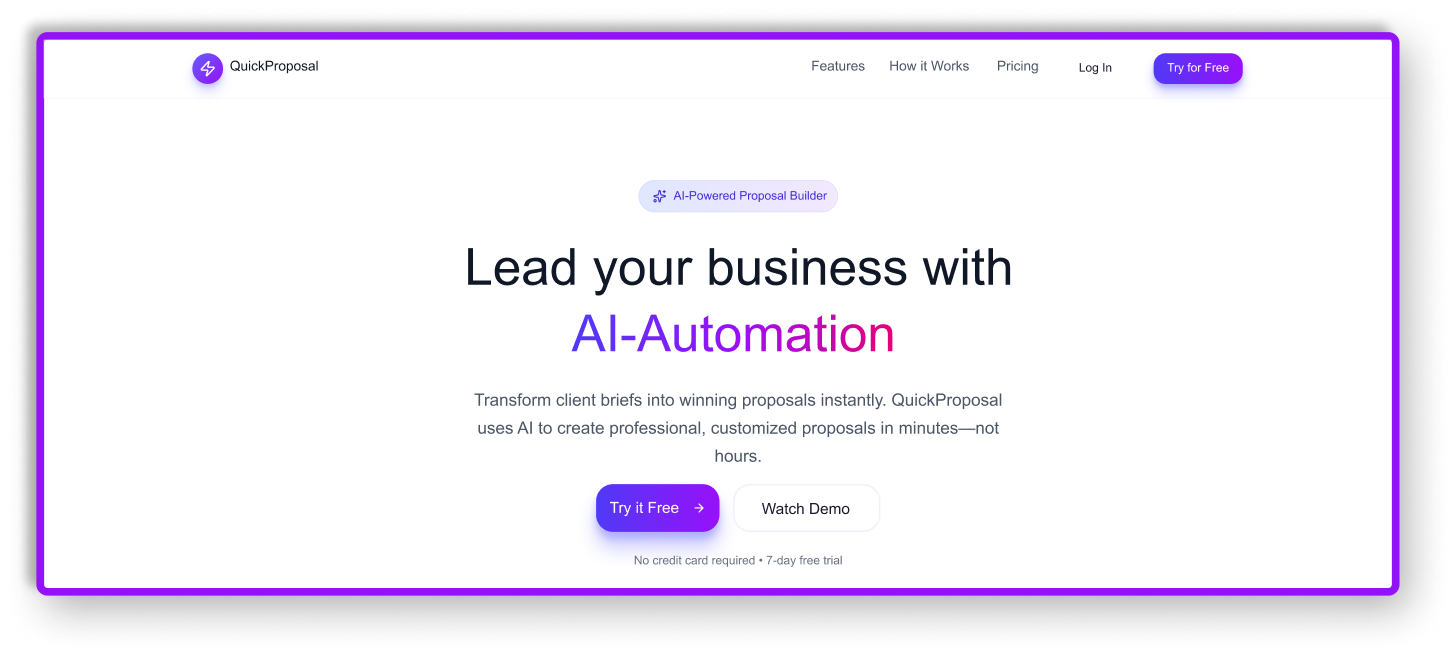
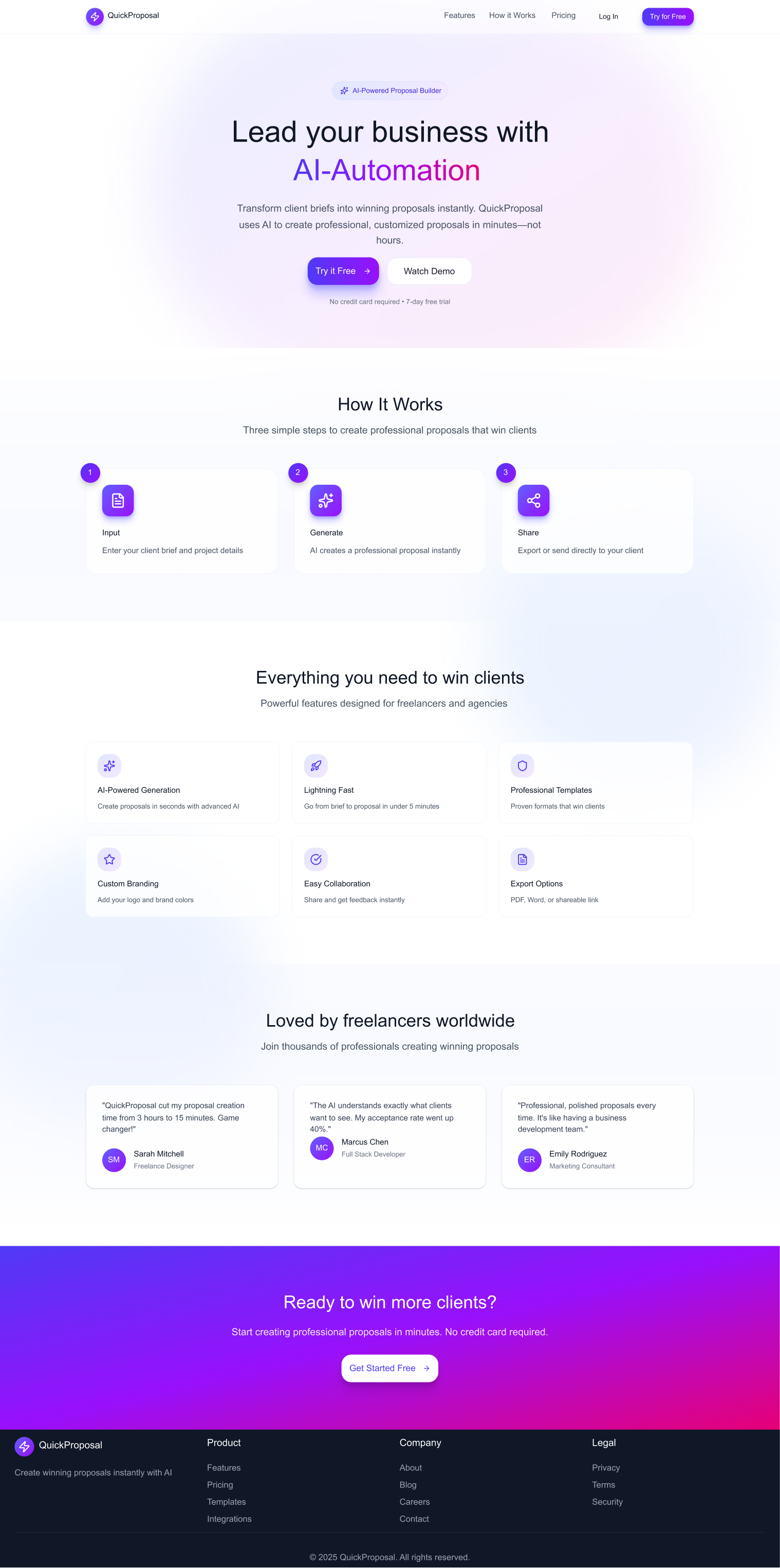
A clear entry point that communicates value, builds trust, and drives action
The homepage is designed to quickly answer three questions for first-time users: what the product does, who it's for, and why it's worth trying. The layout prioritizes clarity over persuasion, using a strong value proposition, simple supporting explanations, and a clear call to action to guide users into the core proposal-creation flow without friction.
A guided onboarding that personalizes the experience from the start
New users are guided through a simple two-step onboarding flow that captures their role and preferences. This personalization helps tailor templates, suggestions, and the overall experience to their specific workflow needs.
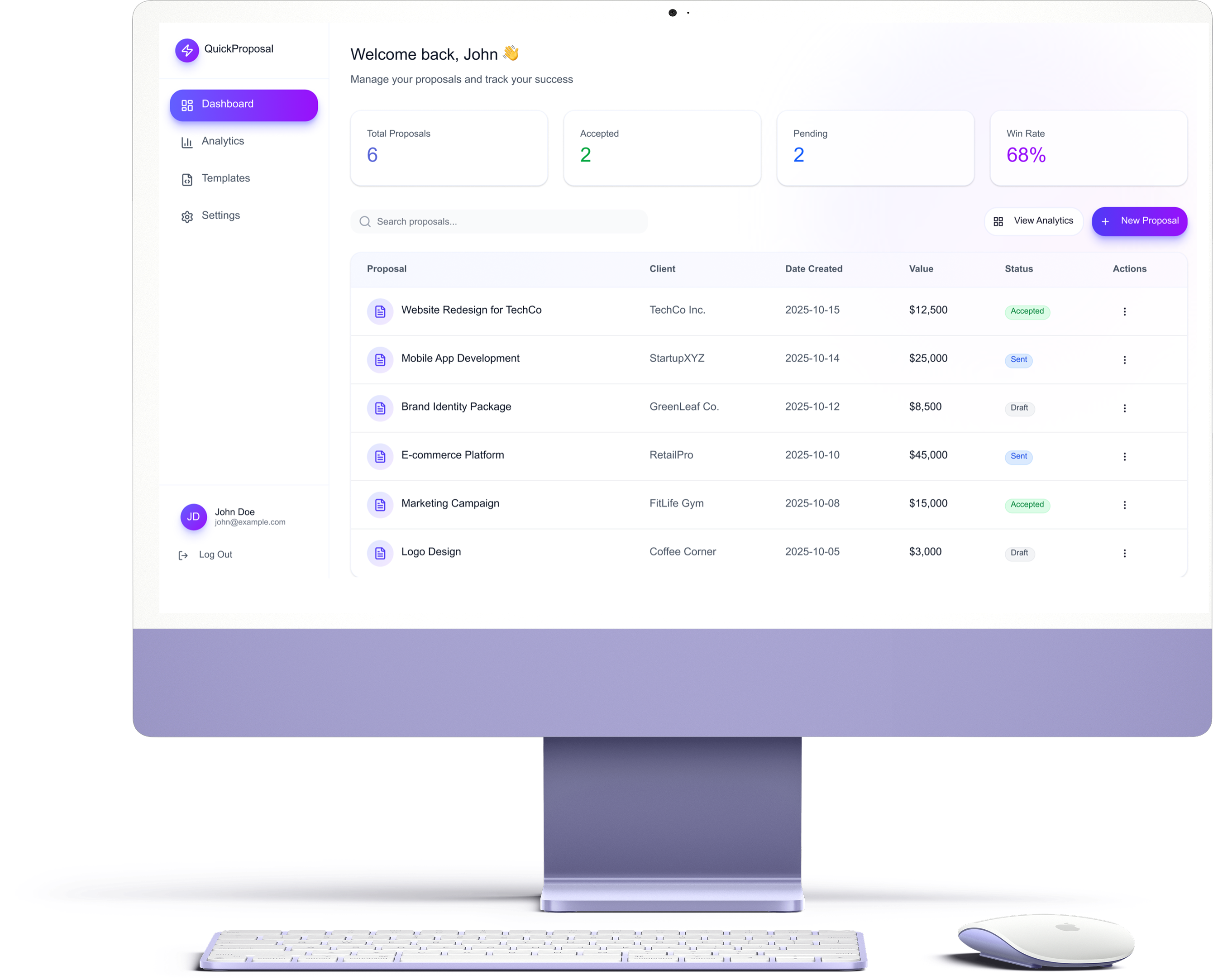
A dashboard designed for clarity and quick action
The dashboard surfaces proposal status, performance, and next actions at a glance, allowing users to quickly resume work or start new proposals without unnecessary navigation.
Guided proposal creation to minimize friction and decision fatigue
I designed a step-by-step proposal flow instead of an open editor to help users move confidently from brief input to a ready-to-send proposal, especially under time pressure.
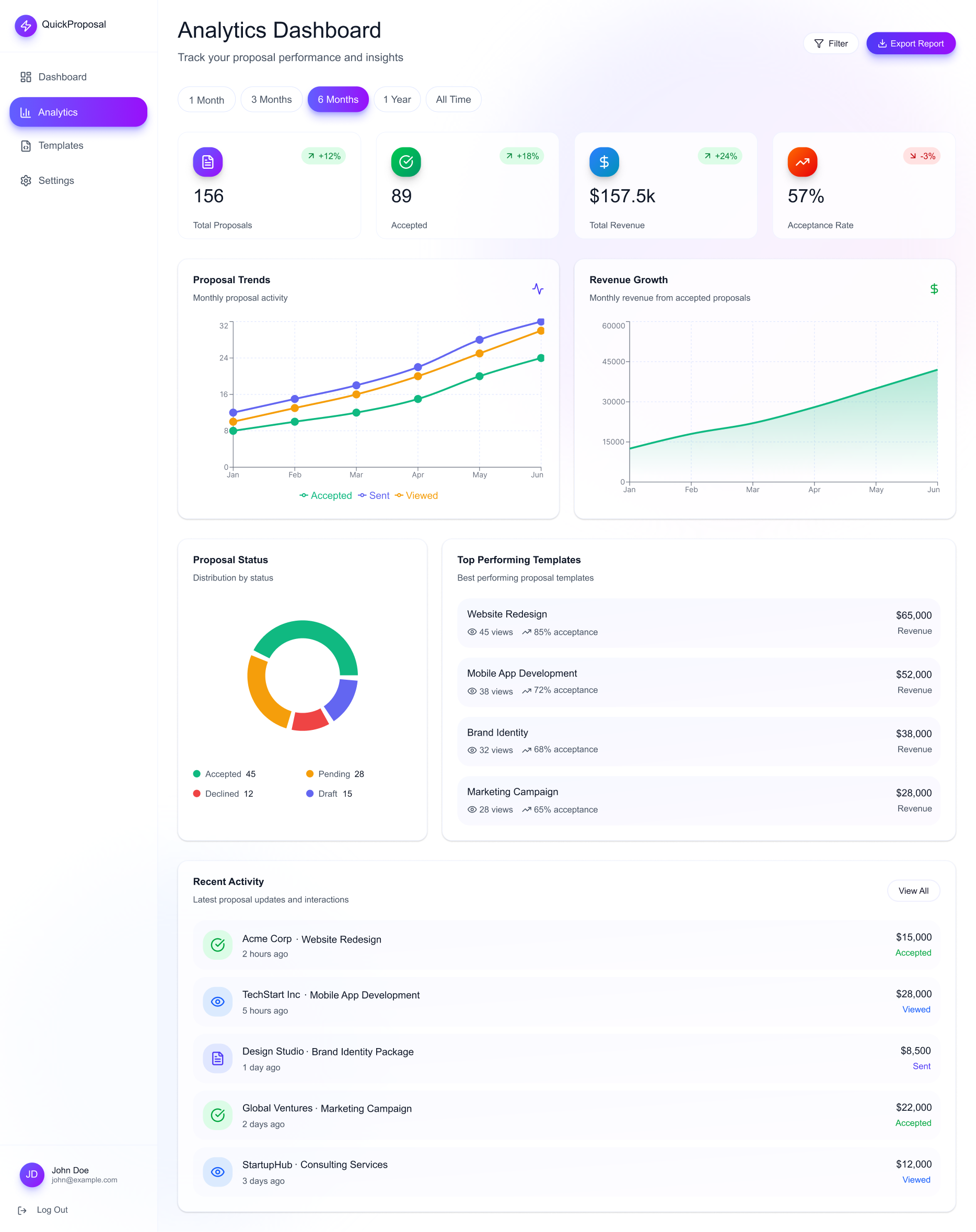
Actionable insights instead of vanity metrics
Analytics focus on proposal outcomes and trends to help users understand what works and refine future proposals, rather than overwhelming them with raw data.
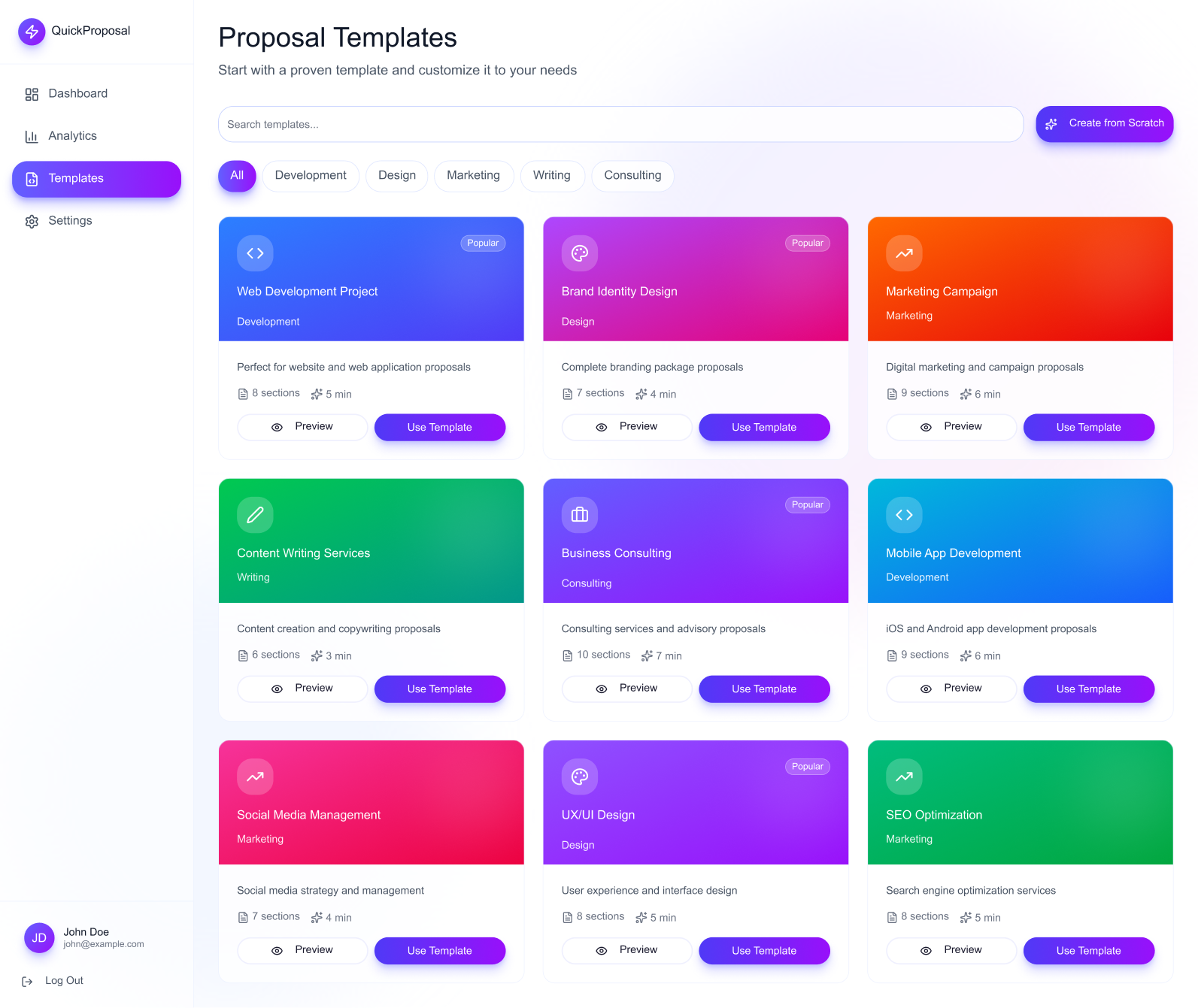
Reusable templates designed for consistency and speed
Templates allow users to reuse proven proposal structures, reducing repetitive work while maintaining flexibility for customization. This supports both efficiency and consistency across multiple clients and projects.
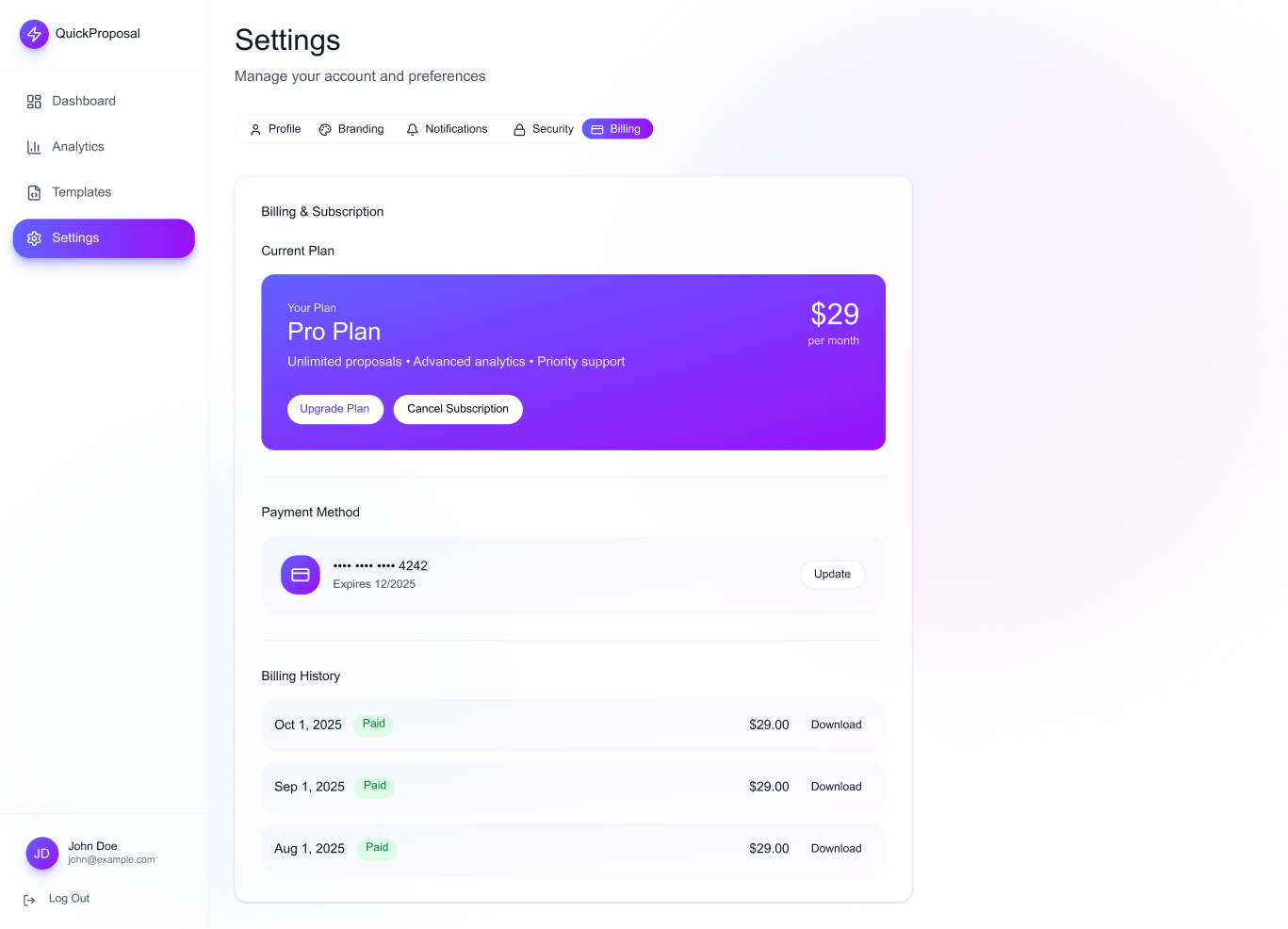
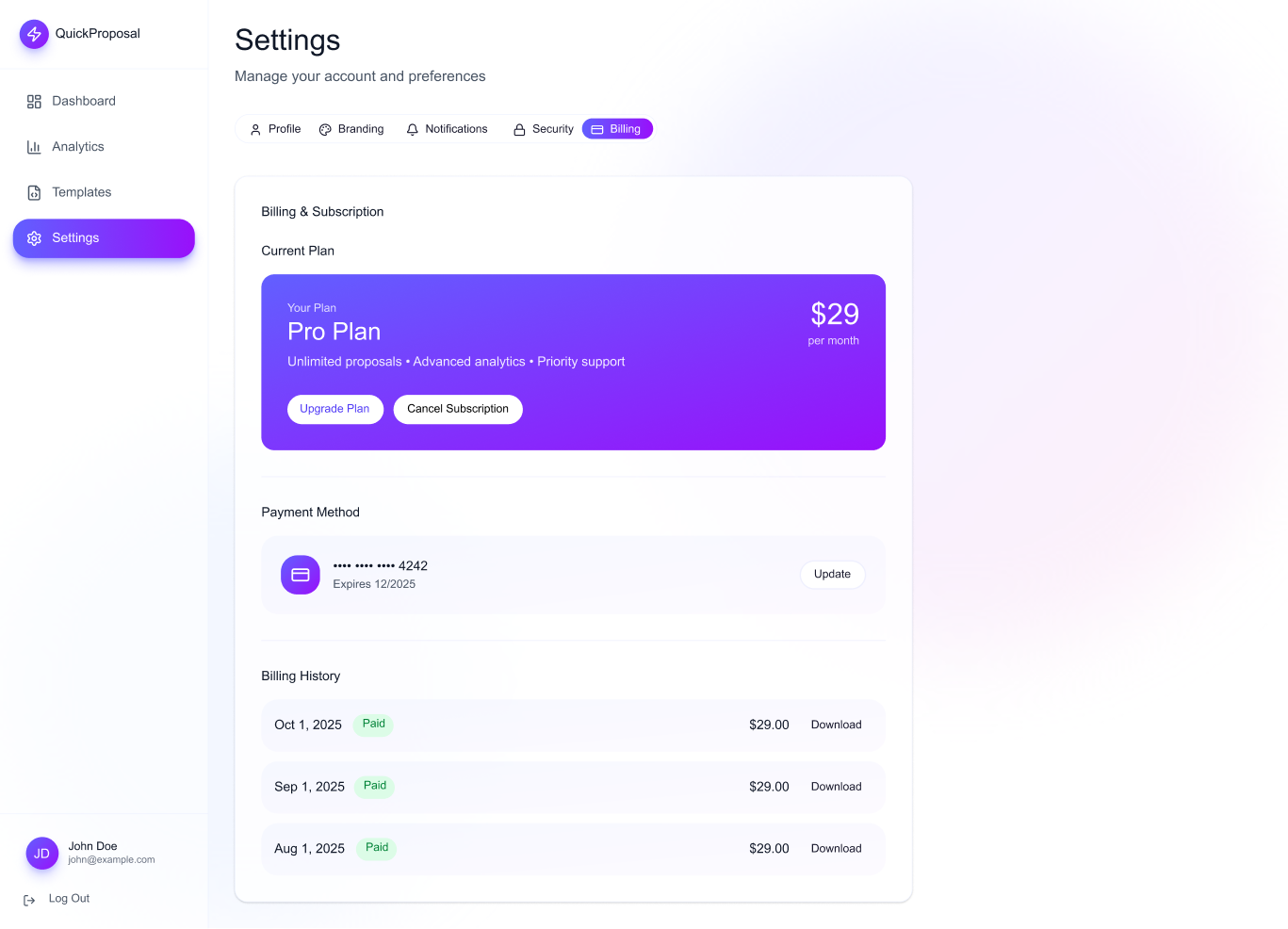
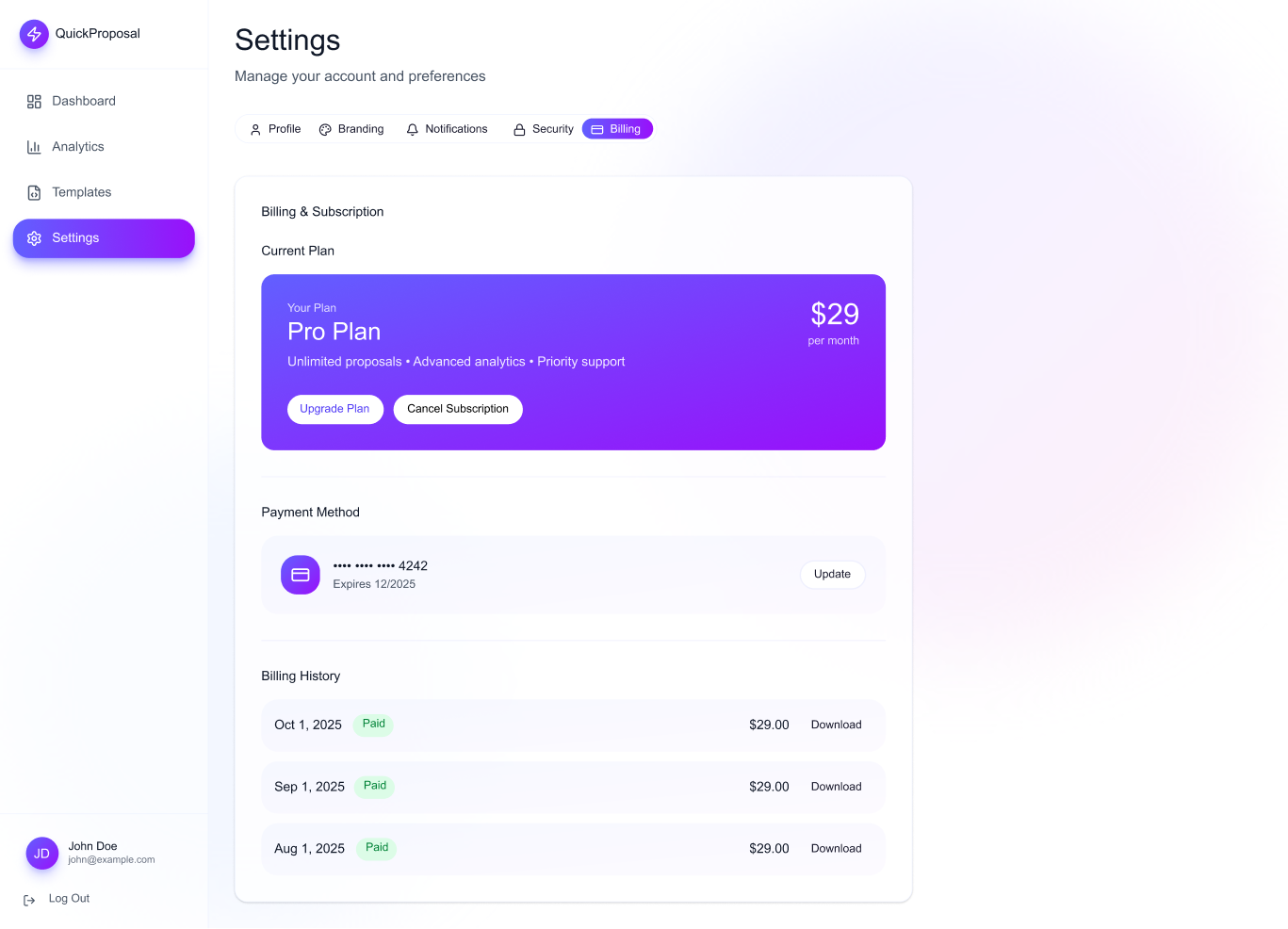
Configuration designed to stay out of the way
Account, branding, and notification settings are designed to be predictable and unobtrusive, supporting long-term use without interrupting core workflows.
Reflection & Next Steps
Designing Propely AI reinforced the importance of restraint when working with AI-assisted workflows. Instead of maximizing automation, I focused on transparency, pacing, and user control to build trust in the experience.
If this product were to ship, the next steps would include usability testing around proposal editing, validating analytics usefulness with real data, and iterating on accessibility to ensure the platform supports a wider range of users and work styles.
View more projects
Back to All Work